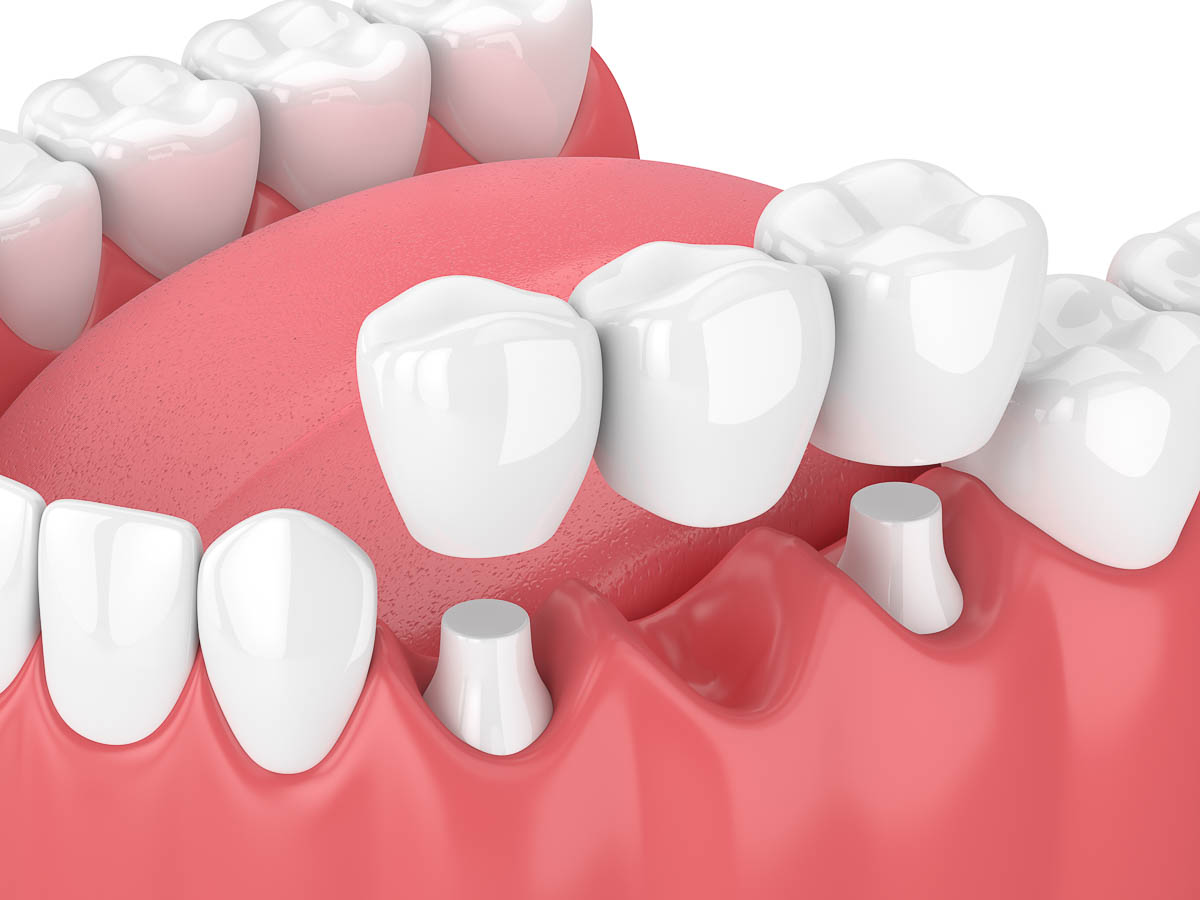

When a patient loses a tooth to decay, trauma or gum disease, it can be a frightening and disturbing time. We understand this and have confidence that we can correct these situations with several options, one of those being a bridge.
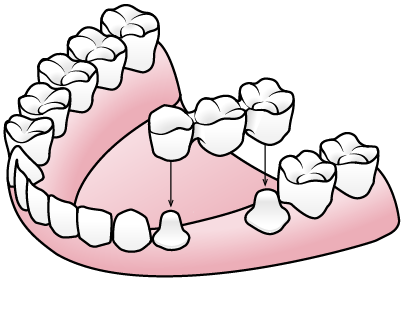
What is a Dental Bridge?
This is where the missing tooth is ‘bridged’ over. The two teeth adjacent to the gap, receive crowns that are connected to a ‘fake’ tooth in the place of the missing tooth. The appearance is natural and the materials that are used to fabricate the bridge vary from metal-free to porcelain fused to gold, all depending on the situation at hand.
Bridge vs. Implant
When the adjacent teeth that are used to hold the bridge in place have large fillings in them, it is an acceptable solution to utilize a bridge. If the adjacent teeth are intact, then the patient has to make an informed decision about going forward with a bridge or consider an implant. There was a time when a bridge was the only solution for replacing a missing tooth, but in the age of implant dentistry, this approach has changed. We always discuss implants as an option.

When is a Bridge the Best Option?
A bridge may be recommended if:
The adjacent teeth have large fillings or require crowns anyway. In such cases, using these teeth to support the bridge is both practical and efficient.
You’re seeking a quicker, less invasive solution compared to implants.
Bone density is insufficient for an implant, and grafting isn’t desired.
The Dental Bridge Procedure at Dr. Suki
Here’s what to expect during your dental bridge treatment:
Preparation of Abutment Teeth: The teeth adjacent to the gap are reshaped to accommodate the crowns that will hold the bridge in place.
Impressions: Detailed molds or digital scans are taken to create a custom bridge that fits perfectly in your mouth.
Temporary Bridge: A temporary bridge may be placed to protect your teeth while your permanent restoration is being fabricated.
Placement of the Permanent Bridge: Once ready, the permanent bridge is securely bonded to the abutment teeth or dental implants. Adjustments are made to ensure a comfortable bite and natural appearance.
Types of Dental Bridges
There are the four main types of dental bridges:
Traditional Bridges – The most common type, traditional bridges use crowns placed on the adjacent natural teeth to support the artificial tooth (pontic). They are strong and work well for patients with healthy teeth on both sides of the gap.
Cantilever Bridges – Unlike traditional bridges, cantilever bridges only require one supporting tooth. These are useful when there’s only one adjacent tooth available but may put extra pressure on the supporting tooth.
Maryland Bridges – Also known as resin-bonded bridges, these use a metal or porcelain framework bonded to the back of adjacent teeth. They require minimal enamel removal and are often used for front teeth.
Implant-Supported Bridges – Instead of relying on natural teeth, these bridges are supported by dental implants. They provide excellent stability and durability, making them ideal for replacing multiple missing teeth.
Each type offers unique benefits based on your dental needs.
Why Choose Dr. Suki for Your Dental Bridge in Houston, TX?
With years of experience and a patient-focused approach, we are dedicated to providing exceptional care. Dr. Leila Ann Suki and our team ensure that every bridge is custom-crafted for durability, comfort, and aesthetics. We use the latest technology and materials to deliver results that meet your expectations and enhance your smile.
contact us to book appointment
Schedule your appointment today
Take the first step towards a brighter, healthier smile today! Schedule your appointment online or give us a call at (713) 664-1004 and experience the best possible care from our experienced team of dental professionals.